
Stainless steel welding: processes, benefits and key considerations
Which processes are used, what has to be controlled during welding and how to choose the right procedure for strong, accurate and well-finished parts.
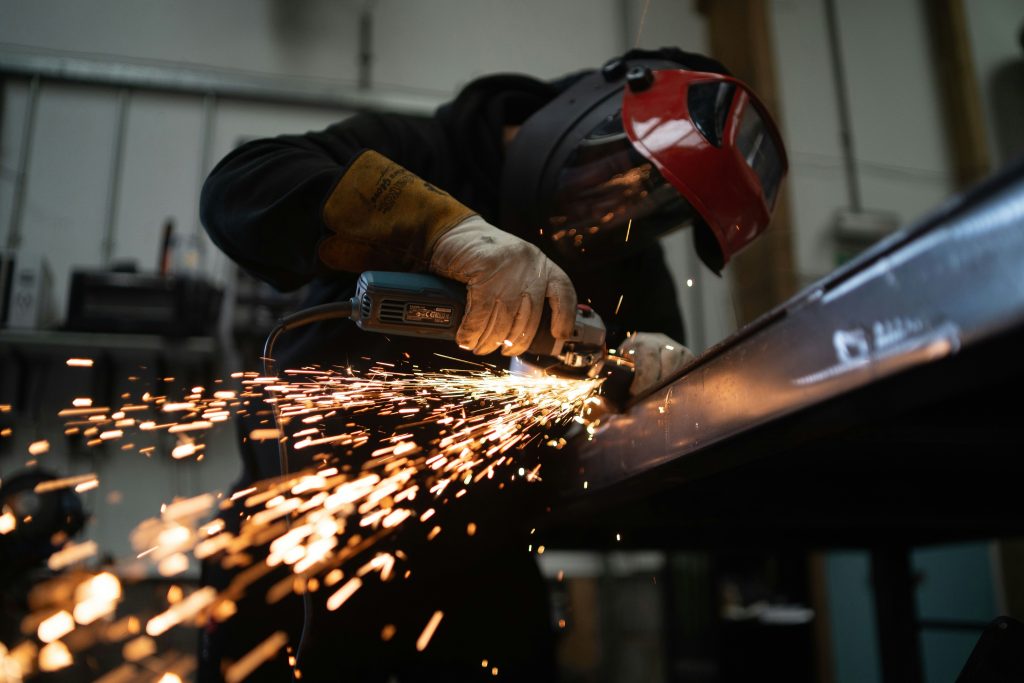
Stainless steel is one of the most widely used materials in industrial manufacturing thanks to its corrosion resistance, durability, ease of maintenance and attractive finish. These properties mean it is commonly found in sectors as varied as the food industry, construction, shipbuilding, the automotive sector and the manufacture of machinery and metal structures.
However, obtaining all these benefits does not depend solely on choosing a suitable stainless steel. The quality of the processing and, above all, of the welding is essential in order to produce parts that are strong, accurate and ready to work under the intended conditions.
Stainless steel welding requires many factors to be controlled: the type of material, the thickness, the geometry of the parts, the heat input, the welding process chosen and the subsequent finish.
At Ikalder we work with a range of welding processes and with materials such as stainless steel, carbon steel and aluminium, adapting the manufacturing procedure to the needs of each industrial project.
What is stainless steel welding?
Stainless steel welding is the process by which two or more parts made of this material are joined using heat, pressure or a combination of different techniques.
Although it may seem similar to welding other steels, stainless steel has particular characteristics that call for careful control of the whole process.
One of the main aims is to achieve a strong joint without needlessly impairing the properties of the material. Excessive heat input, poor surface preparation or contamination during the process can affect both the final appearance and the behaviour of the part.
For this reason, selecting the right welding procedure is essential.
Main types of welding for stainless steel
There are various systems for welding stainless steel. The choice will depend on the thickness of the material, the productivity needed, the finish required and the final characteristics of the part.
TIG welding
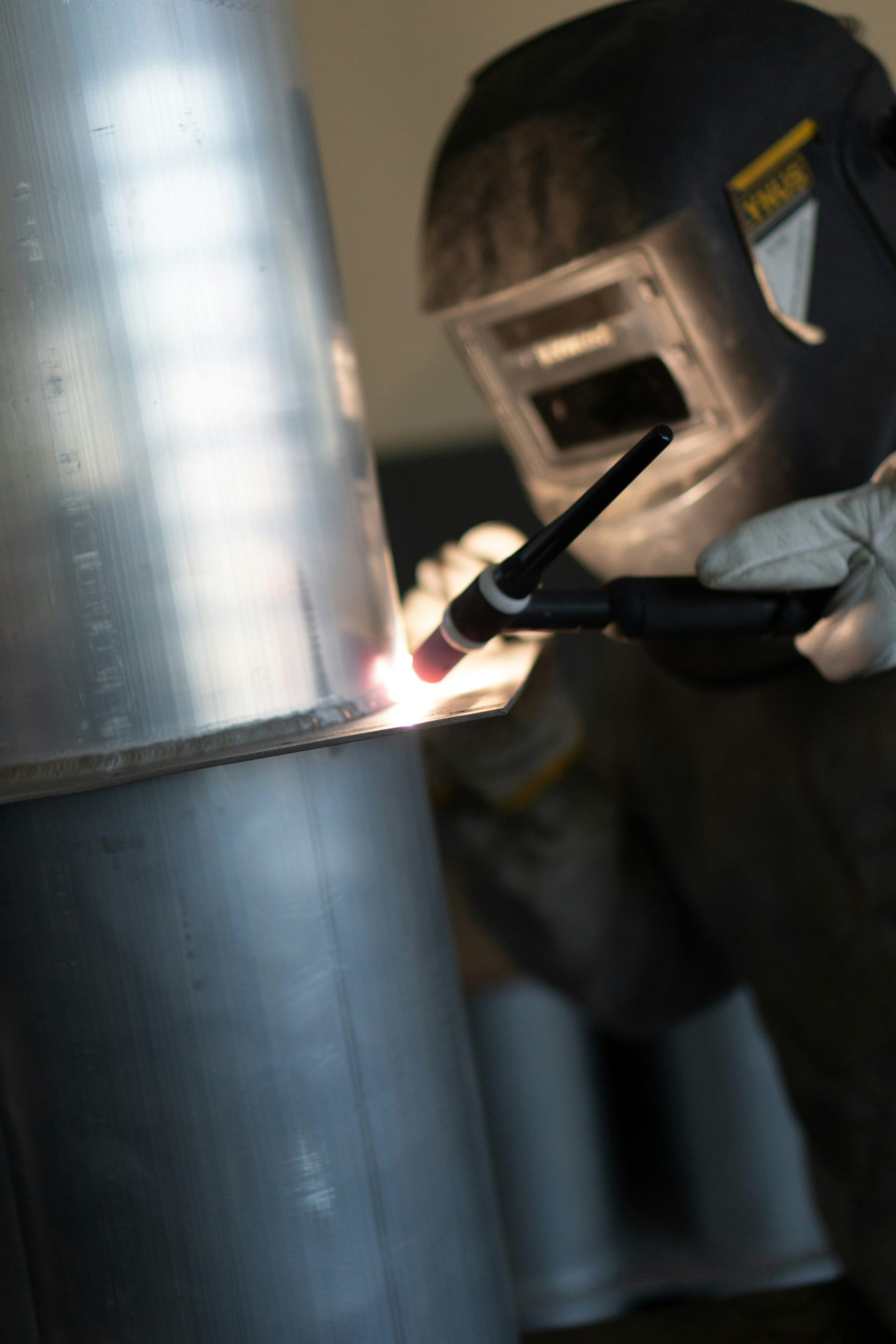
TIG welding is one of the most widely used procedures where a precise joint and a particularly careful finish are required.
This system uses a tungsten electrode and allows a high degree of control over the arc and the heat input. It is therefore particularly well suited to stainless steel work where the appearance of the weld bead, precision or penetration control are important factors.
It is commonly used on pipework, tanks, industrial components and parts where the finish is especially important.
MIG/MAG welding
MIG/MAG welding stands out for its productivity and speed.
This procedure uses a continuous wire as filler material and a shielding gas around the welding arc. This makes joints efficient to produce and lends itself to many industrial manufacturing processes.
It can be a suitable option for projects involving a large amount of welding or where high productivity has to be maintained.
MMA
MMA or SMAW welding
Manual metal arc welding with a covered electrode, known as MMA or SMAW, is another of the processes used in metal manufacturing.
Its versatility means it can be used in a variety of situations and geometries, particularly on work where other techniques may be less practical.
Ikalder has a range of welding technologies and selects the right solution according to the material and the characteristics of the project:
Key considerations when welding stainless steel
Achieving a quality weld takes more than choosing a particular technology. Preparation and process control matter just as much.
Cleaning and preparing the parts
Before welding begins, the surfaces must be properly prepared.
Oils, greases, dirt or other contamination can have an adverse effect on the weld. It is also particularly important to avoid contaminating the stainless steel with particles from other materials.
The tools and equipment used to prepare the surfaces must therefore be suitable for this type of steel.
Heat input control
Temperature is one of the most important factors during welding.
Applying more heat than necessary can cause distortion, affect the surface appearance of the part and alter certain characteristics of the material in the heat-affected zone.
A properly defined procedure keeps this heat input under control and maintains greater consistency throughout the process.
Correct clamping and positioning
Before the final weld is made, it is essential to position the parts correctly.
Good preparation of the assembly makes it easier to hold the dimensions set out in the drawings, reduces movement during the process and helps to control any distortion.
This matters even more on structures, tanks, welded assemblies and industrial parts with specific tolerances.
Post-weld finishing
The work does not always end once the weld bead is complete.
Depending on the characteristics of the project, stainless steel may require further surface finishing operations to achieve the result required.
Processes such as polishing, satin finishing or matt finishing produce different finishes according to both the functional and the aesthetic requirements of each part. Ikalder also brings together a range of surface treatments within its manufacturing capabilities.
Which types of stainless steel are used in industrial manufacturing?
There are many families and grades of stainless steel. Among the most common in industrial manufacturing are 304L and 316L.
The type of steel should be chosen bearing in mind factors such as the environment the part will work in, exposure to corrosive agents, ambient conditions, the finish required and the specific requirements of each industry.
Ikalder works with 304L and 316L stainless steel, along with finishes such as 2B, BA and SAT, so the material can be matched to the needs of each application.
Applications of stainless steel welding
Thanks to its properties, stainless steel welding features in a wide variety of industrial projects.
It can be used to manufacture tanks, hoppers, pipework, machinery components, metal structures, furniture, decorative elements or special bespoke assemblies.
It is also a particularly attractive material for sectors with demanding requirements for strength, durability, hygiene or surface finish.
At Ikalder we develop projects for sectors such as:
Why it pays to work with stainless steel welding specialists
Every metal manufacturing project has different needs. The thickness of the parts, the geometry, the type of steel, the tolerances, the working conditions and the expected finish all determine the choice of welding process.
Working with specialists therefore means the project can be assessed beforehand and the most suitable materials and manufacturing processes selected.
Beyond welding, having several processes under one roof makes it easier to coordinate the different manufacturing stages. Ikalder brings together technical consultancy, cutting, folding and bending, welding and surface treatments, allowing the manufacturing process to be handled from the initial preparation of the part through to its final finish.
Ikalder works with 304L and 316L stainless steel, along with finishes such as 2B, BA and SAT, so the material can be matched to the needs of each application.
Bespoke stainless steel welding at Ikalder
At Ikalder we develop metal manufacturing solutions tailored to the needs of each company and project.
We work with a range of welding technologies and materials to manufacture metal structures, parts in industrial metalwork and other bespoke items, assessing the characteristics of each job in order to select the most suitable process.
Do you need a stainless steel part, structure or assembly manufactured?
Send us the details of your project and we will assess your requirements to offer a manufacturing solution to suit.